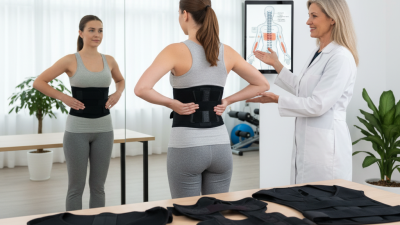
Patients: Please fill out the Form and Nexia will inform you whether your insurance will cover all or part of your brace.
Physician's Offices: Please call 888.670.3380 for special Wholesale Pricing for all braces.

Top Joint Pain Management Products for Global Buyers

Joint pain affects daily movement, sleep, work, and personal independence. For global buyers, selecting suitable Joint pain management products requires more than comparing prices. Product quality, clinical evidence, material safety, and local compliance all deserve careful review. A warming balm may feel comforting after a long day. A compression support may improve confidence during walking. However, comfort does not automatically prove medical effectiveness.

Professor David Hunter, a leading osteoarthritis researcher and rheumatologist, has stated, “Exercise is the best medicine for osteoarthritis.” His observation provides useful perspective. Products should support movement, not replace professional assessment or appropriate exercise. This guide examines practical options, including topical preparations, braces, heat and cold products, mobility aids, and selected supplements. Each category has different benefits, limitations, and purchasing considerations.

Evidence matters.

Global buyers should check transparent ingredient lists, manufacturing standards, independent testing, and clearly stated usage instructions. Regulatory requirements differ between countries, so approval in one market may not confirm suitability elsewhere. Buyers should also consider skin sensitivity, allergies, sizing accuracy, battery safety, and after-sales support. Some products appear impressive online but offer little reliable information. That is a warning sign. No product works equally well for everyone, and even reputable solutions can disappoint when expectations are unrealistic. This overview therefore focuses on informed comparison, responsible sourcing, and practical value. It does not promise a cure. Instead, it helps buyers ask better questions before choosing products for personal use, clinics, retailers, or professional distribution.

Top Joint Pain Management Products for Global Buyers

Joint Pain Management Products: Key Categories and Uses

Joint pain management products fall into several practical categories, each serving a different need. Topical gels, creams, and patches are used for localized discomfort in knees, hands, shoulders, and lower backs. They may suit buyers who want targeted application without taking oral medicine. Skin sensitivity, active ingredients, and application frequency should be checked carefully.

Oral over-the-counter pain relievers can support short-term relief, but they are not suitable for everyone. Buyers should review warnings involving stomach problems, kidney disease, blood pressure, pregnancy, and medicine interactions. Heat packs can relax stiff muscles, while cold packs may help after activity or minor swelling. Use a cloth barrier. Never apply extreme temperatures directly to skin.

Braces, compression sleeves, and walking supports can improve stability during movement. Correct sizing matters. A poorly fitted support may restrict circulation or increase discomfort. Some buyers also consider supplements containing ingredients such as glucosamine or turmeric. Evidence remains mixed, and product quality can vary across markets. Check testing details, ingredient amounts, expiry dates, and local regulations before purchasing. Electrical stimulation devices may help selected users, but professional guidance is sensible, especially with implanted medical devices. A useful category can still be the wrong choice. Pain that persists, worsens, or follows an injury needs qualified medical assessment rather than repeated self-treatment.

How to Evaluate Ingredients, Formulations, and Clinical Evidence

Joint pain products need more than attractive labels. The World Health Organization reports that osteoarthritis affected 528 million people worldwide in 2019. That burden makes ingredient selection important, but popularity is not proof. Examine human trials, participant numbers, treatment duration, and measured outcomes such as WOMAC scores or walking ability.

Formulation details can change practical value. Curcumin products may use delivery systems to improve absorption, yet higher absorption does not automatically mean better pain relief. Glucosamine and chondroitin show mixed results across Cochrane reviews and clinical guidelines. Check the exact chemical form, daily amount, standardization, and excipients. A large serving is not necessarily a stronger product. Sometimes, it is only more expensive.

Clinical evidence should match the buyer’s real needs. Trials lasting eight to twelve weeks offer more useful signals than short laboratory studies. Look for randomized, controlled research and transparent adverse-event reporting. Certificates of analysis can confirm identity, potency, microbes, and heavy-metal limits, but they do not prove effectiveness. This distinction is often missed. I would also verify country-specific labeling and permitted claims before importation. Evidence can remain imperfect, especially when studies use small samples or different formulations. That uncertainty deserves honest wording, not confident packaging.

Top Joint Pain Management Products for Global Buyers - How to Evaluate Ingredients, Formulations, and Clinical Evidence

Ingredient or Product Type Common Formulation and Typical Study Dose Primary Use Case Clinical Evidence Assessment Key Evaluation Criteria for Buyers Important Safety or Regulatory Considerations
Topical diclofenac gel Non-steroidal anti-inflammatory drug gel; commonly studied as 1% gel applied to the affected joint several times daily. Short-term relief of osteoarthritis pain, especially in superficial joints such as the knee or hand. Strong for symptomatic relief. Clinical guidelines and systematic reviews support topical NSAIDs for knee and hand osteoarthritis. Verify active-ingredient concentration, delivered dose, gel uniformity, container compatibility, stability, and instructions for application frequency. May cause local skin reactions and, less commonly, systemic NSAID effects. Country-specific classification, labeling, warnings, and prescription status must be checked.
Capsaicin cream or patch Topical capsaicin preparations commonly range from low-concentration creams to higher-concentration clinical patches. Localized osteoarthritis pain when a topical, non-oral option is preferred. Moderate and formulation-dependent. Repeated use may reduce pain, but initial burning and adherence issues can limit effectiveness. Confirm capsaicin concentration, dose uniformity, applicator design, odor, skin tolerability, and user instructions. Avoid contact with eyes, damaged skin, and mucous membranes. Burning, redness, and irritation are common. Regulatory status varies by market.
Glucosamine sulfate Usually supplied in capsules, tablets, or sachets; clinical studies often use approximately 1,500 mg daily. Longer-term symptom management in knee osteoarthritis. Mixed. Some trials report modest benefit, while others show little or no clinically important improvement. Results may depend on the specific salt and product quality. Clearly distinguish glucosamine sulfate from glucosamine hydrochloride; verify assay, identity testing, dose per serving, and batch-to-batch consistency. Use caution with shellfish-derived materials, diabetes, anticoagulant therapy, and known allergies. Avoid disease-treatment claims unless permitted by local law.
Chondroitin sulfate Capsules or tablets; studies commonly use approximately 800–1,200 mg daily, alone or with glucosamine. Knee or hand osteoarthritis symptom support. Mixed to moderate. Some systematic reviews find small pain or function improvements, but effects are inconsistent across preparations and trials. Specify source, molecular-weight profile, purity, sulfation characteristics, heavy-metal limits, microbiological quality, and validated assay method. Often derived from animal tissues; source disclosure and allergen controls are important. Consider potential interaction with anticoagulants.
Undenatured type II collagen Low-dose capsules are commonly studied, often around 40 mg daily, although formulations differ considerably. Knee discomfort, stiffness, and mobility support. Promising but limited. Small randomized trials report improvements in pain or function, but independent replication and long-term evidence remain limited. Confirm that the material is undenatured rather than hydrolyzed collagen; verify protein identity, degree of denaturation, allergen profile, and stability. Usually animal-derived. Source traceability, infectious-disease controls, vegetarian status, and country-specific animal-origin requirements should be documented.
Hydrolyzed collagen peptides Powders, sachets, or capsules; studies often use approximately 2.5–10 g daily. General joint comfort and activity-related discomfort; often positioned as a nutritional product. Limited to moderate. Some studies show improvements in activity-related pain, but trial sizes, collagen sources, and outcomes vary. Assess peptide molecular-weight distribution, protein content, amino-acid profile, solubility, taste, odor, and contaminant testing. Animal origin and allergen labeling should be clear. Evidence for treating established osteoarthritis is not equivalent to evidence for nutritional support.
Curcumin or turmeric extract Capsules, tablets, or liquid formats; clinical studies use different extracts and doses, commonly about 500–1,000 mg daily of standardized preparations. Short- to medium-term osteoarthritis pain and stiffness support. Promising but heterogeneous. Meta-analyses suggest possible modest symptom relief, but bioavailability systems and extract compositions differ substantially. Declare curcuminoid percentage, extraction solvent, bioavailability technology, marker-compound assay, dissolution, and stability data. Possible gastrointestinal effects and interactions with anticoagulants or antiplatelet medicines. Some enhanced-absorption systems may alter exposure to medicines.
Boswellia serrata extract Standardized resin extracts in capsules or tablets; study doses vary widely, often approximately 100–250 mg of a standardized extract daily. Knee osteoarthritis pain, stiffness, and function support. Low to moderate. Small trials indicate potential benefit, but study quality, extract standardization, and sample sizes are inconsistent. Require botanical authentication, defined boswellic-acid profile, extraction details, adulteration testing, and validated marker assays. May cause gastrointestinal symptoms and may interact with medicines. Botanical identity, pesticide limits, microbial quality, and contaminant controls are essential.
Oral omega-3 fatty acids Fish-oil or algae-oil softgels; products should state the actual EPA and DHA content rather than only total oil. General nutritional support and inflammatory-joint applications; not a proven primary treatment for osteoarthritis pain. Limited for osteoarthritis. Evidence does not consistently demonstrate clinically meaningful osteoarthritis pain relief; stronger rationale exists for selected inflammatory conditions under medical supervision. Verify EPA/DHA oxidation values, purity, heavy metals, environmental contaminants, capsule leakage, and sensory stability. Potential bleeding concerns at high intake or with anticoagulants. Fish and shellfish allergen declarations and sustainable-source documentation may be required.
Oral hyaluronic acid Capsules, tablets, or sachets; clinical doses vary widely, commonly from approximately 80–200 mg daily. Joint comfort and mobility support. Insufficient to limited. Preliminary studies exist, but robust evidence for meaningful osteoarthritis treatment effects is not established. Specify molecular weight, source, purity, residual-protein limits, moisture control, and dissolution characteristics. Source may be microbial or animal-derived; disclose origin and allergen status. Avoid implying that oral products have the same evidence as intra-articular injections.
Combination joint-support formula May combine glucosamine, chondroitin, collagen, botanical extracts, vitamins, or minerals in capsules, tablets, powders, or liquids. Convenience-oriented products for consumers seeking multiple ingredients in one serving. Formula-specific and often uncertain. Evidence for individual ingredients cannot automatically validate the finished combination product. Check transparent dosages, clinically relevant amounts, ingredient compatibility, dissolution, stability, and finished-product testing rather than relying on ingredient presence alone. Higher ingredient counts increase interaction and labeling complexity. Confirm permitted claims, maximum daily levels, allergen statements, and market-specific regulatory classification.
Evidence note: Evidence ratings summarize the consistency and clinical relevance of published research and are not a substitute for regulatory review or medical advice. Buyers should request randomized-trial data for the finished formulation, certificates of analysis, stability results, contaminant testing, and documentation supporting all market-specific claims.

Comparing Topical, Oral, Wearable, and Supportive Product Options

Joint pain products serve different needs, and global buyers should compare evidence before price. The World Health Organization reports that about 1.71 billion people live with musculoskeletal conditions worldwide. Topical anti-inflammatory gels may suit localized knee or hand pain, with lower whole-body exposure than oral medicines. The American College of Rheumatology conditionally recommends topical anti-inflammatory treatment for knee osteoarthritis. However, skin irritation can occur, and application may be inconvenient during travel.

Oral pain relievers can help broader or stronger symptoms, but stomach, kidney, liver, and cardiovascular risks require careful screening. A 2021 Cochrane review found topical anti-inflammatory medicines effective for some acute musculoskeletal pain, although product results varied. Wearable heat wraps, electrical stimulation devices, and compression supports offer convenience without swallowing medication. Evidence remains uneven. Some users report relief, yet device quality and fitting strongly affect outcomes. Supportive braces may improve confidence during walking, but overuse can reduce natural movement. That point deserves more attention.

Tips: Match the product to the pain location, duration, and daily activity. Check active ingredients, dosage instructions, and local regulatory status. Buyers should request clinical evidence, material safety details, and return policies from suppliers. People with ulcers, kidney disease, pregnancy, or multiple medicines need professional advice before oral products. A small trial period can reveal comfort, skin reactions, and real-world usefulness. No option wins every time.

Global Quality, Safety, Labeling, and Regulatory Requirements

Global buyers assessing joint pain management products should begin with quality evidence, not attractive packaging. Common options include topical products, support braces, heat wraps, and non-prescription wellness formulas. Each category requires different testing, materials, and safety controls. In supplier audits, buyers should review batch records, stability data, material specifications, and complaint procedures. Details matter. A polished sample proves very little.

Safety documentation should match the destination market. Check ingredient restrictions, allergen declarations, usage warnings, dosage instructions, and contraindications. Products applied to skin may need irritation or sensitization testing. Wearable supports require accurate material and pressure information. Claims must remain carefully controlled. “Relieves discomfort” may receive different treatment from “treats arthritis” under local rules. Not always obvious.

Labeling should use the required language, measurement units, importer details, lot numbers, expiry dates, and storage conditions. Regulatory classification can change by formulation, intended use, and promotional wording. Buyers should request current certificates and verify them with competent authorities where possible. A mistake happens when suppliers reuse one global label. It can create customs delays or market withdrawal risks. Independent testing adds confidence, but it does not replace legal review. Requirements also change, so documents need regular checks before each shipment.

A Buyer’s Guide to Suppliers, Pricing, Packaging, and Logistics

Top Joint Pain Management Products for Global Buyers

A Buyer’s Guide to Suppliers, Pricing, Packaging, and Logistics

Global demand requires careful product selection. The World Health Organization reports that 1.71 billion people live with musculoskeletal conditions worldwide. Buyers should compare topical products, supports, heat devices, and non-prescription supplements by intended use, evidence, and regulatory classification. Medical claims need review in every destination market. A product accepted as a wellness item in one country may require medical-device documentation elsewhere.

Supplier Quality Supplier quality starts with traceability. Request manufacturing certificates, batch records, stability data, and recent independent laboratory results. Compare minimum order quantities, lead times, payment terms, and landed cost rather than unit price alone. A low factory quote can become expensive after testing, duties, insurance, and port delays. It happens often.

Packaging & Logistics Packaging should protect the product through humid warehouses and long transit routes. Specify tamper evidence, readable batch codes, expiry dates, and multilingual instructions. The OECD’s Global Plastics Outlook states that packaging generates about 40% of global plastic waste, so lighter recyclable formats deserve attention. Logistics planning should follow the World Bank’s 2023 Logistics Performance Index, which evaluates customs, infrastructure, tracking, and delivery timeliness across 139 economies. Use moisture barriers for sensitive goods and test cartons with real stacking loads. Some packaging decisions look efficient, but fail during monsoon-season storage.