How to Choose the Best Lutein Powder Supplier?
Choosing the best Lutein Powder supplier is not a simple price comparison. A bright yellow sample may look impressive, yet appearance proves little about purity or stability. Professional buyers examine the complete supply chain, from marigold cultivation to sealed warehouse storage. They also ask how the supplier handles identification, oxidation control, and batch consistency. These details matter when the powder becomes part of capsules, beverages, or functional foods.
A reliable supplier should provide clear technical documents, including a specification sheet, certificate of analysis, allergen statement, and testing records. Independent laboratory verification can strengthen confidence in lutein content, contaminants, microbiological quality, and heavy metals. However, paperwork should not replace practical evaluation. Requesting a representative sample allows buyers to check color, odor, dispersibility, packaging, and performance in the intended formula. Small differences can become expensive problems during production.
Supplier experience also deserves careful attention. Ask about production capacity, source traceability, storage conditions, lead times, and responses to previous quality issues. A knowledgeable partner explains limitations instead of making perfect promises. No supplier is flawless. That matters. Some companies may offer excellent purity but limited customization, while others provide flexible service with less established documentation. The best choice depends on your product requirements, target market, quality standards, and risk tolerance. A thoughtful comparison can reveal whether the Lutein Powder supplier is genuinely dependable or simply well-presented. This guide explores the practical questions, quality indicators, and warning signs that support a more informed purchasing decision. Manufacturers should review current requirements with qualified regulatory and quality professionals before final approval.
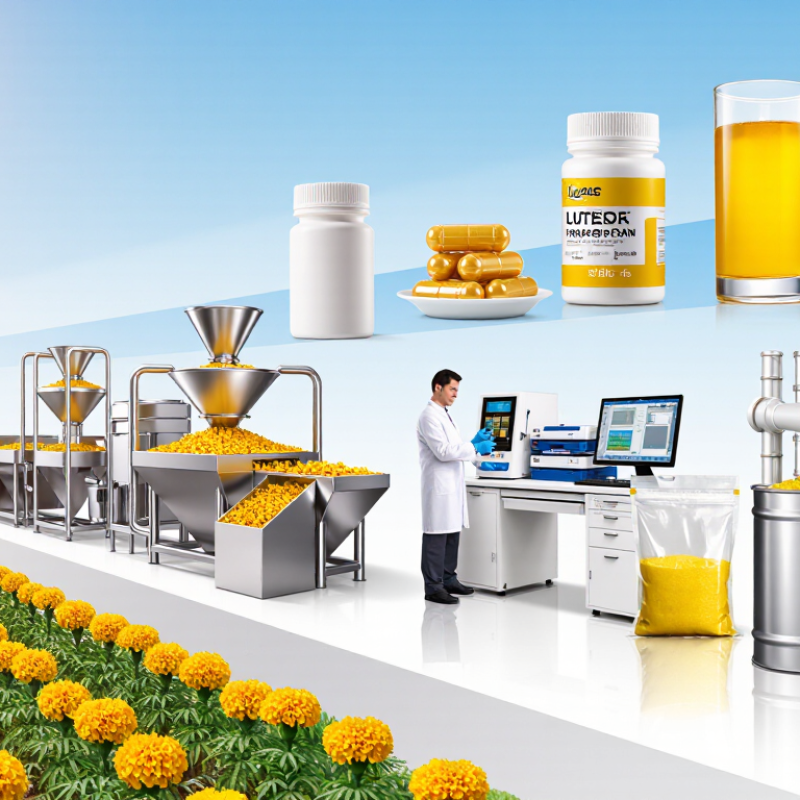
Define Lutein Powder Specifications: Purity, Isomers, Particle Size, and Solubility
How to Choose the Best Lutein Powder Supplier?
A reliable supplier should define lutein powder with measurable specifications, not broad terms like “high purity.” Ask for an HPLC assay, batch number, test date, and testing method. Purity should also identify total lutein and related carotenoids separately. The AREDS2 clinical protocol used 10 mg of lutein and 2 mg of zeaxanthin daily, showing why isomer reporting matters (National Eye Institute, AREDS2 Report). “Lutein” alone is not enough.
Check the isomer profile carefully. All-trans lutein is usually the primary form, while cis-isomers may appear after processing or storage. A certificate should state their percentages and acceptance limits. The FAO/WHO JECFA specifications for food additives emphasize identity, assay, and impurity controls. These principles are useful when comparing suppliers, even for dietary ingredient powders.
Particle size affects handling, dispersion, and final formulation performance. Request D50 and D90 values, not only “fine powder.” A powder with a D90 below 100 micrometers may disperse more easily, but this is not a universal guarantee. Lutein is naturally oil-soluble, so water-dispersible powder requires evidence, such as dispersion time, carrier composition, and stability data. Ask for results at realistic temperatures. Room-temperature testing may hide problems. No specification is perfect; sampling errors, oxidation, and laboratory variation still matter. A thoughtful buyer should review trends across several batches, not trust one attractive certificate.
Verify Supplier Quality Systems Through GMP, HACCP, ISO 22000, and COA Records
How to Choose the Best Lutein Powder Supplier?
Verify Supplier Quality Systems Through GMP, HACCP, ISO 22000, and COA Records
A reliable lutein powder supplier should provide more than a polished product page. Request current GMP, HACCP, and ISO 22000 certificates. Check the certificate scope, manufacturing site, expiry date, and independent issuing body. A certificate covering another facility proves little.
Ask for evidence.
Review batch-specific COA records, not generic templates. Each COA should identify the lot number and testing date. It should also report lutein content, identity, moisture, microbial limits, and heavy metal results. Test methods and laboratory details make the document more credible. Compare the COA with your purchase specification before approval.
Small gaps matter.
During supplier evaluations, ask how raw materials are received, quarantined, and released. A mature system should show traceability from incoming material to finished powder. Request examples of deviation handling, corrective actions, and retained-sample procedures. These records often reveal more than a certificate.
Do not assume ISO 22000 guarantees every quality attribute. It supports food safety management, while product specifications still require separate verification. I have found that even organized suppliers may send incomplete documents. That is not automatically disqualifying, but their response matters. Clear explanations, prompt corrections, and consistent records indicate stronger reliability. When uncertainty remains, arrange independent testing before production use.
Compare Extraction Sources, Standardization Levels, and 10 mg Daily Use Data
How to Choose the Best Lutein Powder Supplier?
Extraction source matters because it affects traceability, purity, and formulation consistency. Marigold flowers remain a common commercial lutein source. Algae-derived lutein is also available, but suppliers should disclose the organism and growing conditions. Ask for a current certificate of analysis, batch number, heavy-metal results, microbiological testing, and HPLC identity data. A polished specification sheet is not enough. I would also check whether testing covers the finished powder, not only the raw extract.
Standardization deserves closer attention. A powder labeled “lutein extract” may contain very different active levels. Look for a declared percentage, such as 5% or 20% lutein, plus measured assay results.
The NIH Office of Dietary Supplements notes that AREDS2 used 10 mg lutein with 2 mg zeaxanthin daily. The five-year clinical report, published in JAMA Ophthalmology in 2013, evaluated this formula in older adults at risk of age-related macular degeneration.
That does not make 10 mg a universal recommendation. It is a useful reference point for product comparison. Real-world products can still vary in absorption, stability, and capsule or powder uniformity.
Tips: Compare assay values, not extract weight. Request three recent batch reports. Confirm storage data, especially after opening. Suppliers should explain carrier oils, antioxidants, and moisture limits. One practical weakness remains: many sales pages cite clinical studies without matching their exact ingredient profile. That deserves skepticism.
Evaluate Stability, Packaging, Traceability, MOQ, Lead Time, and Total Cost per kg
Choosing the best lutein powder supplier starts with stability, not a colorful specification sheet. Ask for real-time and accelerated stability data under defined temperature, humidity, and light conditions. Lutein can lose potency when exposed to oxygen, heat, or strong light. Request testing results for assay, moisture, particle size, and microbiological quality. Confirm the analytical method and test date. Independent verification may expose gaps.
Packaging should match the product’s risks and your shipping conditions. Prefer sealed, light-resistant containers with suitable oxygen protection. Check whether the inner liner is food-grade and compatible with the powder. Ask for batch codes, origin records, processing dates, and retention-sample procedures. Traceability should connect the finished powder to each raw material lot. Test it with a simple question: can the supplier locate one batch quickly?
MOQ and lead time affect cash flow more than many buyers expect. A low MOQ may carry a higher price per kilogram, while a large MOQ can create storage loss. Calculate total cost per kg, including freight, testing, customs, warehousing, repacking, and waste. Ask for standard and urgent lead times, production capacity, and safety-stock options. Do not treat one successful batch as proof of consistency. That is an easy mistake. Supplier claims deserve evidence, and your checklist may need revision after the first shipment.
How to Choose the Best Lutein Powder Supplier? — Evaluate Stability, Packaging, Traceability, MOQ, Lead Time, and Total Cost per kg
| Supplier Profile | Typical Lutein Powder Specification | Stability Evidence | Packaging Configuration | Traceability & Quality Documentation | MOQ | Typical Lead Time | Estimated Product Price
per kg | Estimated Total Cost
per kg | Evaluation Result |
| Profile A | 5% lutein powder
Marigold-derived, water-dispersible
Assay tolerance: ±10% | 24-month stated shelf life
Storage: ≤25°C, dry and protected from light
Accelerated stability data available | 5 kg aluminum foil bags
Sealed in fiber drums
Oxygen absorber included | Batch COA, allergen statement, GMO statement, pesticide and heavy-metal testing
Full batch-to-raw-material linkage | 100 kg | 35–45 days | $92–$108 | $101–$119 | ★★★★☆
Strong balance of quality and cost |
| Profile B | 10% lutein powder
Marigold-derived, beadlet-based
Assay tolerance: ±10% | 24-month stated shelf life
Nitrogen-flushed production
Real-time stability data available | 10 kg high-barrier foil bags
Double polyethylene liner
Nitrogen-flushed packaging | Batch COA, residual-solvent, microbial, pesticide and heavy-metal reports
Electronic traceability to production date | 250 kg | 45–60 days | $168–$192 | $176–$204 | ★★★★★
Best stability and documentation package |
| Profile C | 5% lutein powder
Marigold-derived, standard dispersion grade
Assay tolerance: ±15% | 18-month stated shelf life
Storage: ≤25°C, dry and protected from light
Limited long-term stability records | 25 kg HDPE-lined fiber drums
Standard foil inner bag
No routine nitrogen flushing | COA and basic microbiological testing
Pesticide and heavy-metal reports available on request
Lot-to-lot traceability | 25 kg | 20–30 days | $78–$94 | $93–$116 | ★★★☆☆
Low entry quantity and short lead time |
| Profile D | 20% lutein powder
Marigold-derived, high-concentration beadlets
Assay tolerance: ±10% | 24-month stated shelf life
Recommended storage: 15–25°C
Stability data under normal and accelerated conditions | 5 kg aluminum foil bags
Vacuum-sealed inner liner
Light-resistant fiber drum | COA, identity testing, microbial limits, pesticide, heavy-metal and solvent reports
Raw-material and finished-batch traceability | 500 kg | 50–70 days | $286–$322 | $292–$335 | ★★★★☆
Lowest cost per lutein-active equivalent at scale |
| Profile E | 5% lutein powder
Marigold-derived, oil-dispersible grade
Assay tolerance: ±10% | 18-month stated shelf life
Storage: below 20°C preferred
Basic stability summary available | 1 kg foil sachets in cartons
Moisture-barrier secondary packaging
Suitable for frequent small-batch use | COA, allergen statement and GMO statement
Additional testing available at extra charge
Partial upstream traceability | 50 kg | 25–35 days | $105–$128 | $124–$151 | ★★★☆☆
Convenient packaging but higher delivered cost |
| Profile F | 10% lutein powder
Marigold-derived, water-dispersible
Assay tolerance: ±15% | 12-month stated shelf life
Storage: below 25°C, low humidity
Limited accelerated stability data | 20 kg polyethylene-lined bags
Fiber drum outer packaging
Standard moisture protection | Basic COA and microbial testing
Other compliance documents supplied after order confirmation
Limited batch history | 100 kg | 15–25 days | $142–$166 | $153–$184 | ★★☆☆☆
Fast and inexpensive, but higher quality risk |
Cost and Evaluation Assumptions
- Total cost per kg includes the estimated product price, standard export packaging, documentation, and economy freight allocation for a consolidated shipment. It excludes import duty, VAT, local warehousing, testing failures, and reformulation costs.
- Price ranges are practical procurement benchmarks for conventional marigold-derived lutein powder and should be confirmed against the required assay, dispersion system, certification, destination, and order volume.
- For a fair comparison, request the same documents from every supplier: batch COA, identity test, assay method, microbiological limits, heavy metals, pesticide residues, residual solvents, allergen status, GMO status, shelf-life data, and storage conditions.
- Recommended selection rule Choose the lowest total-cost option that meets the required stability period, traceability level, packaging protection, and regulatory documentation—not simply the lowest quoted price.